
Diversity is often described as a challenge to overcome. But what if it's actually what makes learning possible in the first place?
This is the question the OPEN EU project has been exploring across several countries. And the answer we keep hearing from practitioners and community participants alike is remarkably consistent: the deepest learning doesn't happen despite difference — it happens because of it.
The concept of communities of practice, developed by Jean Lave and Étienne Wenger, describes groups of people who share a common domain and get better at what they do through regular interaction. It rests on three key elements: the domain — what brings people together; the community — the people who take part; and the practice — how the learning actually happens.
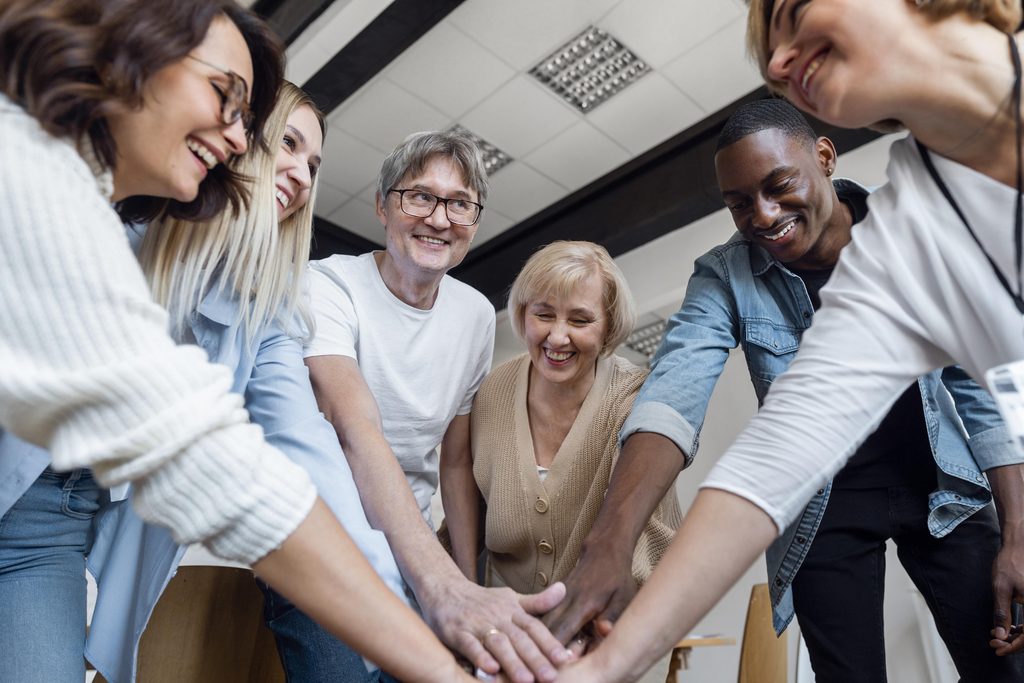
Crucially, a community of practice is not a club of like-minded people. It's a space where people with different experiences, roles, and perspectives come together to produce knowledge that none of them could reach alone. That's where its strength lies: diversity becomes not an obstacle, but a resource for shared learning.
In our work, this diversity shows up on two interconnected levels.
At the level of participants: internally displaced persons and members of host communities bring different experiences into the shared space — region of origin, cultural traditions, life stories, and their own understanding of everyday life. Ukraine alone is currently home to an estimated 4.6 million internally displaced people, and research shows the relationship between them and host communities is, on the whole, a positive one: 68% of IDPs report a positive attitude toward them from host communities, 27% describe it as neutral, and only 4% as negative. Focus groups conducted across several regions of Ukraine showed that when space for dialogue is deliberately created, difference can become a source of mutual learning rather than tension. Conversation clubs, women's groups, "Living Library" sessions, and storytelling work not because they erase differences, but because they make personal experience visible and valued.
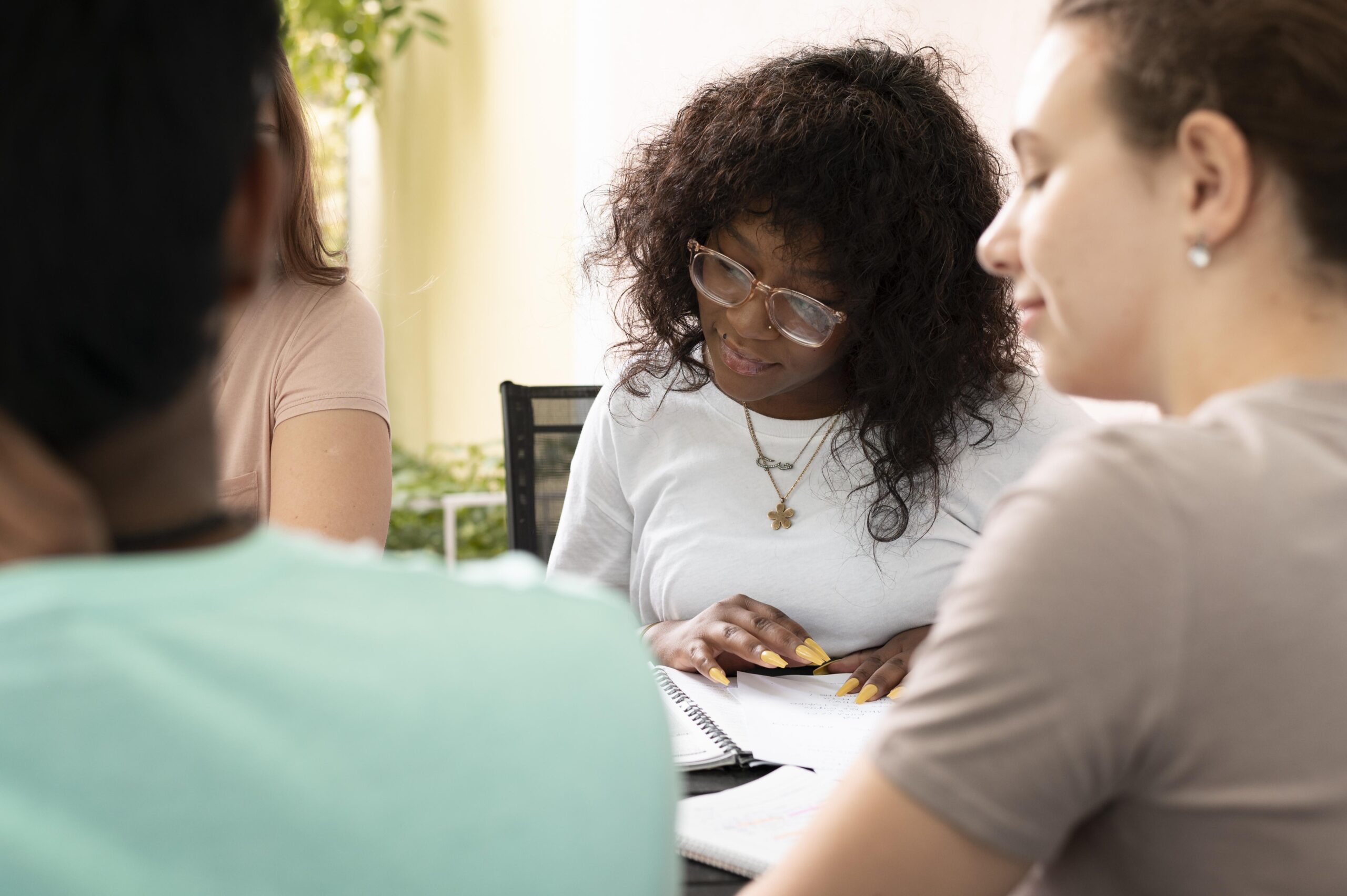
At the level of practitioners: social workers, educators, civil society representatives, trainers, and facilitators also come to the table with their own professional and personal experience. Nadiya Yurova, a facilitator at our civil society organisation, speaks to the value of thinking through difficult situations together, from different vantage points:
“I often work with youth leaders at the national level, but when there's a chance to work alongside colleagues who have experience working in small communities — that's valuable. They have knowledge and skills that I don't. So working together shapes my own experience too.”
When diversity becomes a resource rather than a source of friction, the very nature of learning changes. It stops being a one-way transfer of knowledge from “the one who knows” to “the one who doesn't.” Instead, what emerges is a shared production of understanding — one that holds space for multiple experiences at once.
Tools that make personal experience visible and accessible to others play a particular role here. In the “Living Library” format, a person becomes a carrier of lived experience that can be shared through dialogue. In place of the abstract category “IDP,” a specific person appears — with their own story, values, and resources.
Storytelling works on a similar logic: a personal narrative creates a shared language where none existed before. It allows people to see the individual behind the social category, and in doing so, narrows the distance between “us” and “them.”
Both formats rest on the same principle: everyone taking part is a carrier of knowledge, regardless of their status or role.
The OPEN EU project is itself an attempt to build a community of practice — across countries, languages, and contexts. And perhaps that's one of the central lessons of our work so far: the conditions we're researching are, at the same time, the conditions we need to create ourselves.
Note on terminology: “othering” — a term used throughout the OPEN EU project — refers to the process of framing a person or group as fundamentally different, lesser, or threatening, which underlies many of the barriers to inclusion discussed here.
Follow OPEN EU:
Instagram: @openeuproject
Facebook: OPEN EU Project